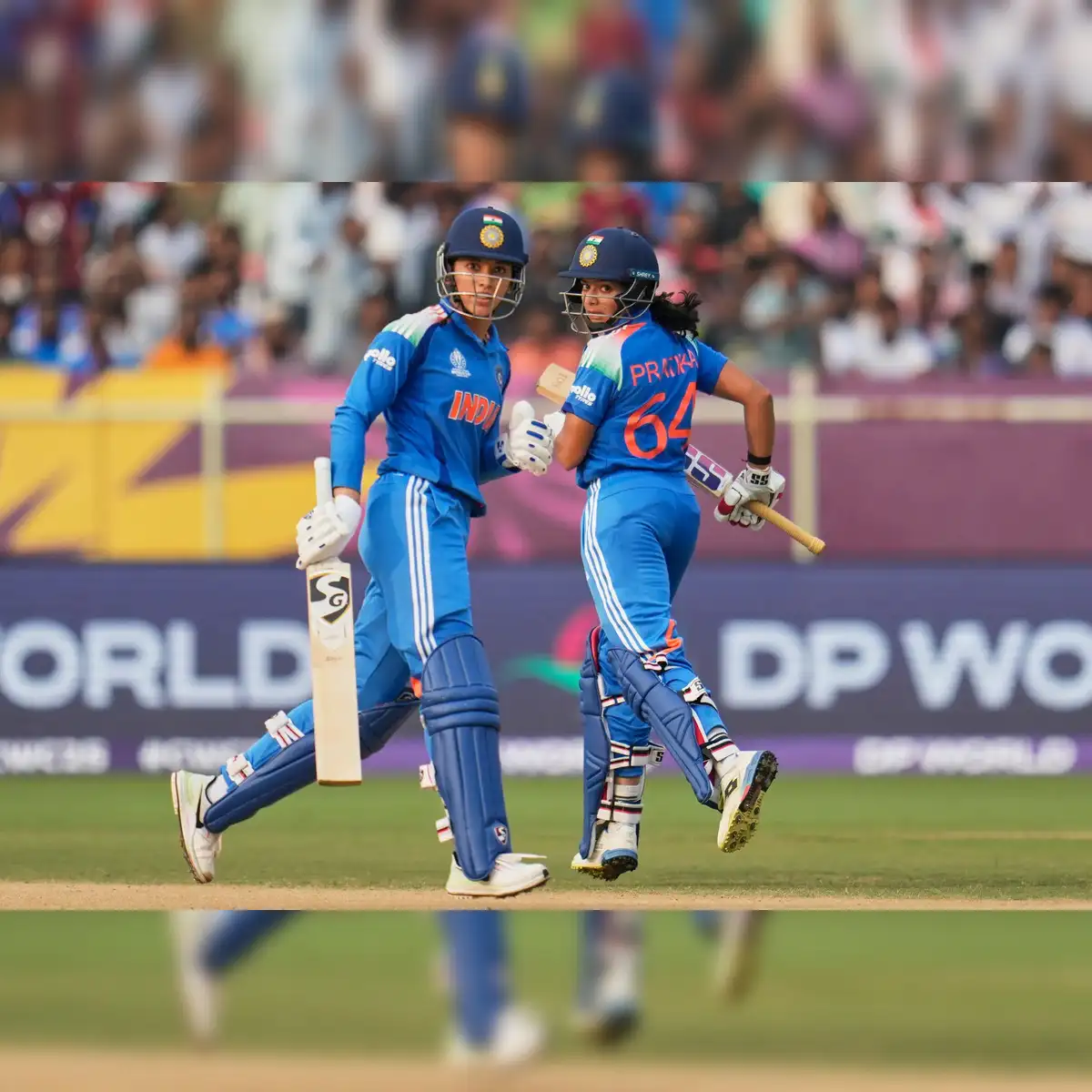
n a recent Women’s World Cup clash that captured attention across cricketing circles, Smriti Mandhana and Pratika Rawal orchestrated a stunning opening partnership that has already etched its name into the record books. Their performance not only set the tone in India’s innings but also spotlighted the evolving depth and balance in India’s batting order.
The Historic Opening Stand
What stood out most from the match was the highest-ever women’s ODI opening stand by an Indian pair. Mandhana and Rawal combined with poise, aggression and calculated shotmaking to build a platform that gave the middle order breathing room. Their partnership was more than just big numbers — it was a message that India no longer heavily depends on just one or two star batters to carry the innings.
Mandhana, already in prolific form, and Rawal complemented each other beautifully. While Mandhana brought experience, maturity, and deft strokeplay, Rawal added attacking energy and willingness to take the bowler on from the start. Their synergy in running between the wickets, rotating strike, and punishing loose balls meant India accelerated when needed and solidified during challenging spells.
Why This Partnership Matters
- Changing the mindset: In the past, India’s opening partnership has often been viewed as a foundation-builder rather than a threat in its own right. This stand demands that opponents treat Indian openers as match-winners, not just those who give the innings a start.
- Pressure on spinners early: With such a strong opening base, India made life harder for any chasing or defensive side. Spinners introduced early could no longer enjoy the same early dominance, and attacking fields had to be reconsidered.
- Relief for the middle order: The weight of expectation often falls on middle batters when early wickets tumble. With Mandhana and Rawal negating that burden, batters like Jemimah Rodrigues, Deepti Sharma or Harleen Deol could play their natural game.
- Long-term depth indicator: This isn’t just one day’s heroics — it signals that India’s batting bureaucracy is becoming deeper and more robust, which is vital for sustained success in global tournaments.
Anatomy of the Knock
The innings can broadly be segmented into phases:
- Steady start: The first 10 overs involved careful probing, as both batters evaluated the bowlers, rotated strike and assessed pitch behavior.
- Acceleration zone: Between overs 15 and 30, they picked up momentum, targeting short balls and overpitched deliveries to keep the run rate in check.
- Pressure absorption & release: Against spin or crafty variations, they dug in, played smartly, and then released the reins when bowlers strayed.
- Finish push: As powerplay overs winded down, they shifted gears—aimed boundaries, punished loose balls, and left India well-positioned for a big total.
It’s not just the final numbers that matter but how their tempo shifted — they were never behind the run rate curve, yet still paced themselves to finish strongly.
What India Needs to Capitalize
- Consistent starts: If Mandhana + Rawal can replicate similar combinations in other matches, India gains stability.
- Balancing aggression and calculation: The early overs must still see safe accumulation rather than reckless aggression; their approach in this match was a lesson in balance.
- Support from lower order: The opening stand can’t carry the innings alone. The rest of the lineup has to convert starts into big scores.
- Bowling synergy: With runs on the board, India’s bowlers must reciprocate — exploit the pressure induced by such stands.
Broader Significance
This partnership is part of a wave of dynamic performances in the 2025 Women’s World Cup that showcase how the game is rising in depth, competitiveness, and tactical richness. On a tournament where records are being broken every few games, performances like Mandhana + Rawal’s do more than just win matches — they shift paradigms.